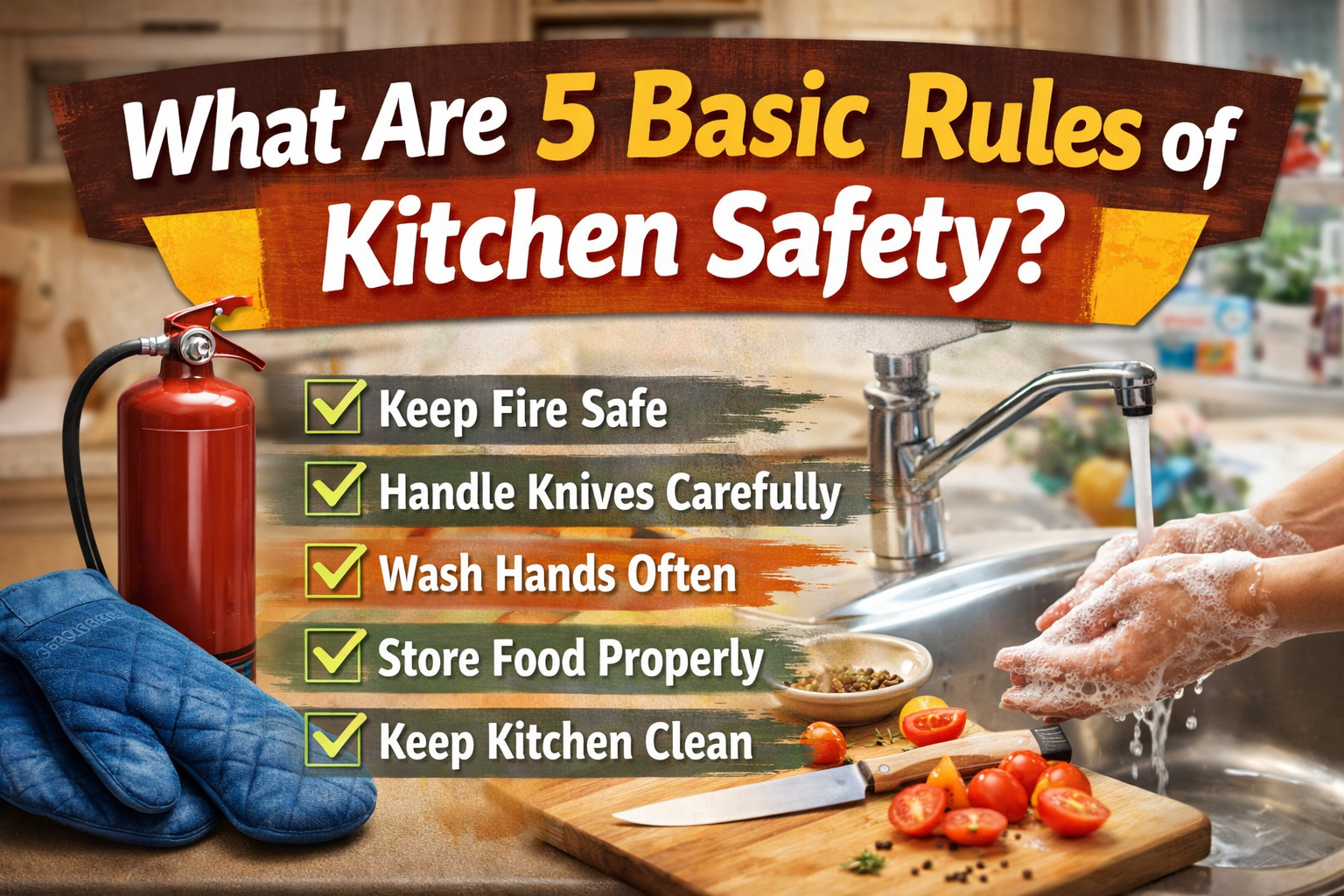
What Are 5 Basic Rules of Kitchen Safety?
Cooking at home is enjoyable, but safety should always come first. What are 5 basic rules of kitchen safety? This question is very important for anyone who spends time in the kitchen. Understanding simple safety practices helps prevent accidents, burns, and injuries. A safe kitchen environment allows you to cook comfortably while protecting yourself and others in your home.
Many beginners often ask, What are 5 basic rules of kitchen safety? The answer starts with keeping the kitchen clean and organized. A clean cooking area reduces the risk of contamination and accidents. Spilled liquids, leftover food, and scattered utensils can easily cause slips or injuries. By keeping your workspace tidy, you create a safer and more efficient kitchen.
Another important point when thinking about What are 5 basic rules of kitchen safety? is proper hand washing. Before touching food, it is essential to wash your hands with soap and clean water. This simple habit helps remove germs and bacteria that may cause illness. Clean hands protect both the cook and the people who will eat the meal.
Knife safety is also a key part of understanding What are 5 basic rules of kitchen safety? Knives are one of the most commonly used kitchen tools, but they can be dangerous if used incorrectly. Always use a sharp knife and cut on a stable surface like a cutting board. A dull knife requires more pressure and can easily slip, causing injury.
Another important answer to What are 5 basic rules of kitchen safety? is handling hot surfaces carefully. Stoves, ovens, and hot pans can cause serious burns if touched without protection. Always use oven gloves or thick cloth when handling hot cookware. Being careful around heat sources keeps you safe while cooking.
Food storage is also an important topic when discussing What are 5 basic rules of kitchen safety? Raw and cooked foods should be stored separately to prevent contamination. Keeping foods at the correct temperature helps stop harmful bacteria from growing. Refrigeration and proper containers help keep ingredients fresh and safe.
Understanding fire safety is another important part of What are 5 basic rules of kitchen safety? Kitchens contain many heat sources, and fires can start quickly if care is not taken. Avoid leaving cooking food unattended and keep flammable items away from the stove. Knowing how to react quickly can prevent serious damage.
Another helpful tip related to What are 5 basic rules of kitchen safety? is wearing proper clothing while cooking. Loose sleeves or hanging fabric can easily catch fire or touch hot surfaces. Wearing fitted clothing and tying back long hair helps prevent accidents.
When learning What are 5 basic rules of kitchen safety? it is also important to keep electrical appliances in good condition. Damaged wires or wet hands can cause electric shocks. Always unplug appliances when they are not in use and keep them away from water.
Child safety is another aspect of What are 5 basic rules of kitchen safety?. If children are present in the home, dangerous tools such as knives, hot pans, and cleaning chemicals should be kept out of reach. Supervising children in the kitchen ensures their safety and prevents accidents.
Cleaning during cooking is also related to What are 5 basic rules of kitchen safety?. Washing dishes, wiping spills, and organizing tools while cooking keeps the kitchen safe and manageable. A clean environment reduces the risk of slips and cross contamination.
Many cooks also think about hygiene when discussing What are 5 basic rules of kitchen safety?. Always wash fruits and vegetables before using them. This removes dirt, chemicals, and bacteria from the surface of the food.
Another important point connected to What are 5 basic rules of kitchen safety? is proper waste disposal. Kitchen waste should be placed in covered bins and removed regularly. This prevents bad smells and keeps pests away from the kitchen area.
Good lighting is also helpful when considering What are 5 basic rules of kitchen safety?. A well lit kitchen makes it easier to see what you are doing. Proper lighting helps avoid mistakes when cutting, cooking, or cleaning.
Learning safe cooking habits is a big part of understanding What are 5 basic rules of kitchen safety?. Taking your time, paying attention, and avoiding distractions helps prevent accidents. Safe habits become easier when practiced daily.
Another helpful tip related to What are 5 basic rules of kitchen safety? is keeping emergency items nearby. A small first aid kit and a fire extinguisher can be very useful in case of accidents.
Professional chefs also follow the principles behind What are 5 basic rules of kitchen safety?. In professional kitchens, safety rules are strictly followed to protect workers and maintain food quality.
Practicing safety daily helps reinforce the ideas behind What are 5 basic rules of kitchen safety?. Over time these habits become natural and help create a safer cooking environment.
Families also benefit from learning What are 5 basic rules of kitchen safety?. When everyone in the home understands basic kitchen safety, the risk of accidents becomes much lower.
In conclusion, understanding What are 5 basic rules of kitchen safety? helps create a safe and comfortable cooking environment. By keeping the kitchen clean, handling tools carefully, and following basic hygiene rules, anyone can cook safely and confidently.
Kitchen Hygiene Chart
| Practice | Purpose |
|---|---|
| Hand washing | Remove germs |
| Clean surfaces | Prevent contamination |
| Wash vegetables | Remove dirt |
Knife Safety Chart
| Tip | Benefit |
|---|---|
| Use sharp knives | Safer cutting |
| Use cutting board | Stable surface |
| Store knives safely | Avoid accidents |
Fire Safety Chart
| Action | Reason |
|---|---|
| Stay near stove | Prevent fire |
| Keep cloth away | Avoid burning |
| Use fire extinguisher | Emergency control |
Food Storage Chart
| Food Type | Storage Method |
|---|---|
| Raw meat | Separate container |
| Cooked food | Refrigerator |
| Vegetables | Cool drawer |
Kitchen Organization Chart
| Item | Purpose |
|---|---|
| Utensil drawer | Easy access |
| Spice rack | Better cooking |
| Storage shelf | Organized kitchen |