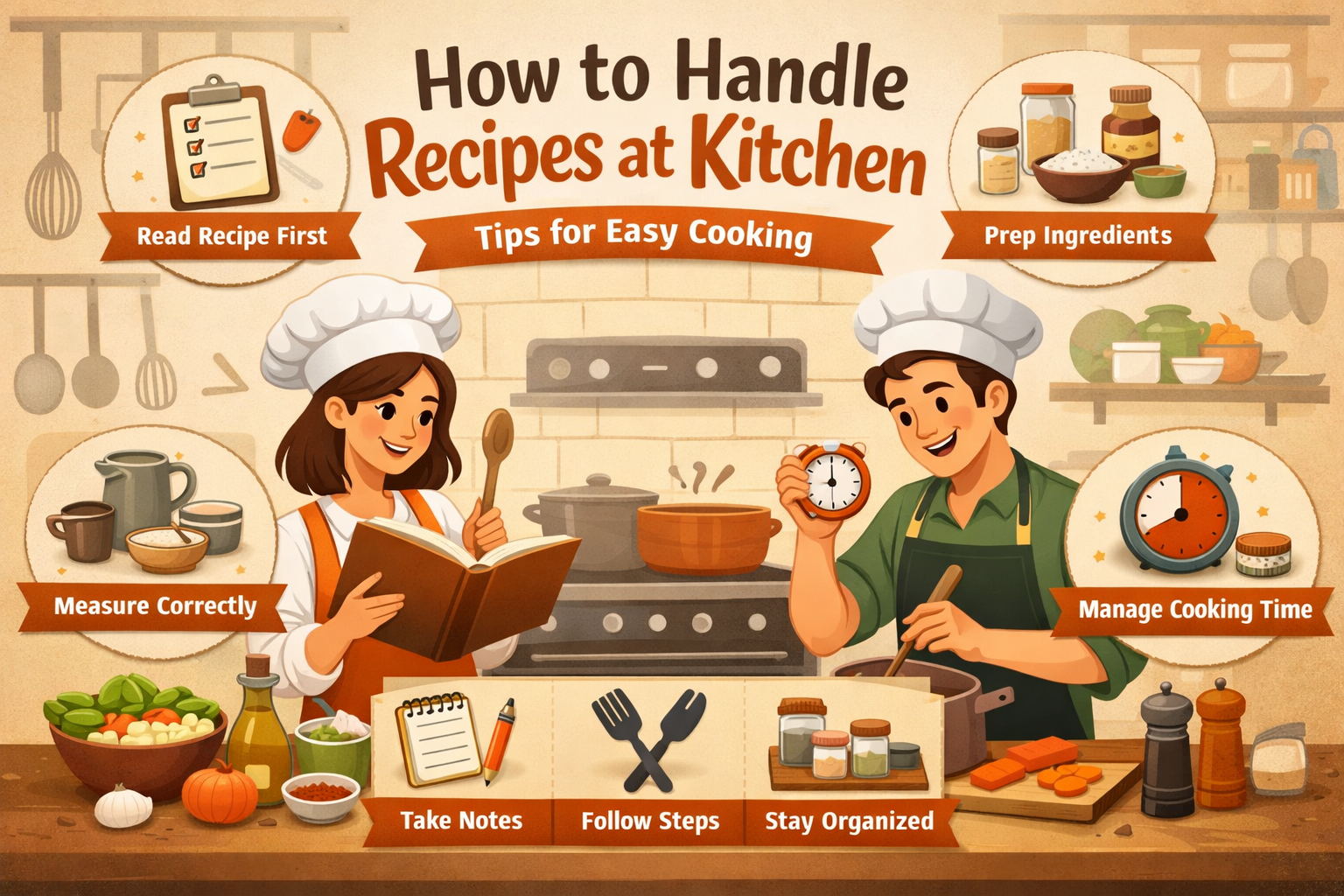
Cooking at home can be fun and relaxing, but sometimes recipes feel confusing, especially for beginners. Many people struggle with measurements, timing, and organizing ingredients. That is why learning how to handle recipes at kitchen is very important. When you understand the right way to follow and manage recipes, cooking becomes easier and more enjoyable.
If you learn how to handle recipes at kitchen, you will save time, reduce mistakes, and make delicious meals every day. In this guide, we will explain simple tips that anyone can follow to cook better and manage recipes easily.
Read the Recipe Carefully Before Cooking
The first step in learning how to handle recipes at kitchen is reading the entire recipe before starting. Many people start cooking without reading the full instructions, and this can create problems later.
When you read the recipe first, you understand:
- All ingredients required
- Cooking time
- Preparation steps
- Special tools needed
This simple habit helps you stay organized. Understanding how to handle recipes at kitchen starts with good preparation.
Prepare All Ingredients in Advance
A great cooking habit is preparing everything before you begin. Professional chefs call this “mise en place,” which means putting everything in place.
Preparing ingredients is an important part of how to handle recipes at kitchen because it makes cooking smooth and stress-free.
Before starting:
- Wash vegetables
- Cut ingredients
- Measure spices
- Keep utensils ready
This saves time and helps you focus on cooking.
Use the Right Measurements
Many recipes fail because people do not measure ingredients correctly. Measuring ingredients properly is a key skill in how to handle recipes at kitchen.
Use:
- Measuring cups for liquids
- Measuring spoons for spices
- Kitchen scale for accuracy
Correct measurements ensure that your dish tastes exactly as the recipe intends.
Follow the Cooking Steps in Order
Another important tip for how to handle recipes at kitchen is following the steps in the correct order. Recipes are written step-by-step for a reason.
For example:
- Heat oil first
- Add onions next
- Then add spices
If you skip steps or change the order, the taste may change. Following the instructions carefully helps you cook perfect meals.
Manage Cooking Time Properly
Time management is very important when learning how to handle recipes at kitchen. Some ingredients cook faster while others take more time.
Tips for better timing:
- Set a timer for baking
- Cook vegetables at medium heat
- Avoid overcooking meat
Managing cooking time keeps food fresh, tasty, and healthy.
Keep Your Kitchen Organized
A clean and organized kitchen helps you understand how to handle recipes at kitchen more effectively.
Keep these habits:
- Wash dishes while cooking
- Keep ingredients in one place
- Use labeled containers
When your kitchen is organized, cooking becomes faster and less stressful.
Taste the Food While Cooking
One of the best cooking tips for how to handle recipes at kitchen is tasting the food during cooking.
Sometimes recipes may need small adjustments such as:
- More salt
- Extra spices
- Slight sweetness
Tasting helps you balance flavors and improve the final dish.
Learn Simple Substitutions
Sometimes you may not have all ingredients available. Learning substitutions is another smart way to master how to handle recipes at kitchen.
Examples:
- Yogurt instead of cream
- Lemon juice instead of vinegar
- Honey instead of sugar
These small changes help you continue cooking without stopping.
Write Notes for Future Cooking
A smart habit for learning how to handle recipes at kitchen is writing notes after cooking.
You can note things like:
- Cooking time adjustments
- Spice level changes
- Personal taste preferences
This helps improve your cooking every time you make the same recipe.
Practice Makes Cooking Perfect
Cooking skills improve with practice. The more you cook, the easier how to handle recipes at kitchen becomes.
Start with simple recipes and slowly try new dishes. Over time, you will feel confident and comfortable in the kitchen.
Cooking is not only about food; it is also about creativity and enjoyment.
Useful Charts for Better Cooking
Basic Kitchen Measurement Guide
| Ingredient | 1 Cup Equivalent |
|---|---|
| Flour | 120 grams |
| Sugar | 200 grams |
| Rice | 180 grams |
| Milk | 240 ml |
| Butter | 227 grams |
Cooking Temperature Guide
| Food Item | Ideal Temperature |
|---|---|
| Chicken | 75°C |
| Beef | 70°C |
| Fish | 63°C |
| Vegetables | Medium Heat |
| Baking Cakes | 180°C |
Basic Spice Usage Chart
| Dish Type | Common Spices |
|---|---|
| Curry | Turmeric, Chili, Coriander |
| Rice | Cumin, Bay Leaf |
| Soup | Black Pepper, Garlic |
| Grilled Food | Paprika, Pepper |
| Desserts | Cinnamon, Cardamom |
Cooking Time Guide
| Food | Average Cooking Time |
|---|---|
| Rice | 15–20 minutes |
| Pasta | 8–12 minutes |
| Chicken | 25–35 minutes |
| Vegetables | 10–15 minutes |
| Eggs | 5–10 minutes |
Kitchen Organization Chart
| Area | What to Store |
|---|---|
| Pantry | Flour, Rice, Spices |
| Refrigerator | Vegetables, Milk, Meat |
| Drawer | Knives, Spoons |
| Shelf | Plates, Bowls |
| Counter | Frequently used tools |
Conclusion
Learning how to handle recipes at kitchen is a valuable skill that makes cooking easier and more enjoyable. By reading recipes carefully, preparing ingredients, measuring correctly, and managing cooking time, anyone can cook delicious meals at home.
With practice and organization, mastering how to handle recipes at kitchen becomes simple. Start with small steps, keep your kitchen tidy, and enjoy the process of cooking tasty food for yourself and your family.